
Safe Property Access Starts with Hazard Elimination
Tree Removal Services in Suffolk for storm-damaged trees, hazardous growth, and complete property clearing
When a tree develops structural failure or suffers storm damage, the risk to rooflines, power lines, and vehicle access increases with every weather event. Earthworxs Solutions provides complete tree removal for residential properties and land clearing projects across Suffolk, addressing trees that pose immediate hazards or interfere with planned construction. Removal work eliminates the failure risk entirely, clearing the space for safer access and future use.
Tree removal involves sectional cutting for trees near structures, rigging to control descent paths, and ground-level cutting where clearance allows. Hazardous trees—those with root heave, split trunks, or heavy lean toward buildings—require controlled dismantling to prevent uncontrolled falls. Storm-damaged trees often carry hidden fractures in the trunk or branches that make standard felling unsafe.
Schedule a property evaluation to identify trees requiring removal and assess access routes for equipment.
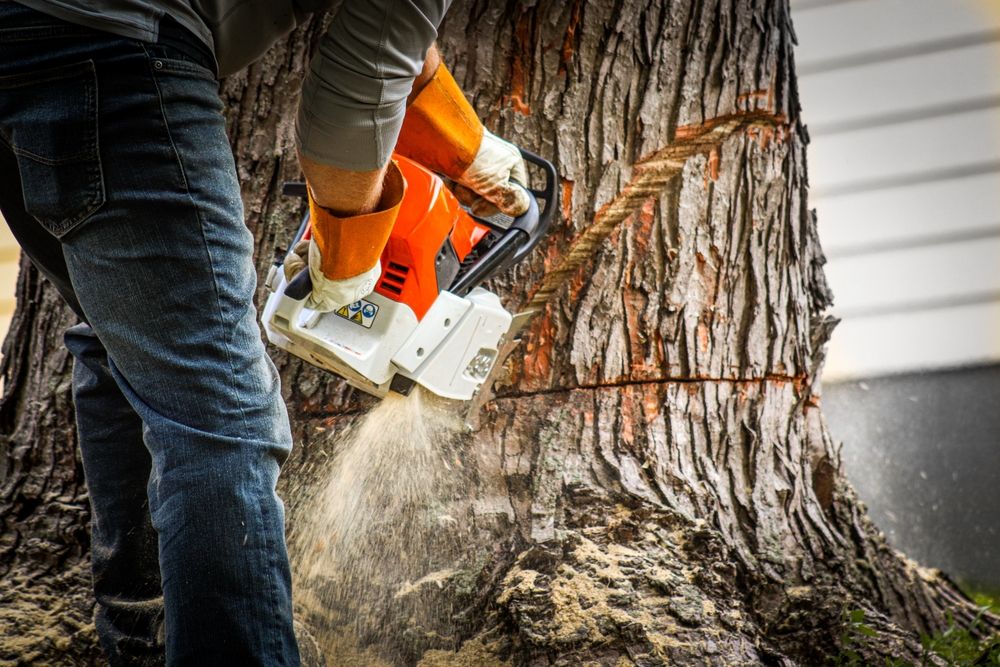
What Happens During Complete Tree Removal
Removal begins with an assessment of lean direction, nearby obstacles, and whether the tree can be felled in one piece or must be sectioned from the top down. Trees close to homes, fences, or utility lines are dismantled in sections using ropes and rigging to lower each piece without impacting surrounding structures. Once the trunk is reduced to a manageable height, the remaining base is cut flush with the ground or left slightly above grade for stump grinding.
After removal, you gain clear sight lines across the property, eliminated overhead hazards, and prepared space for landscaping or construction. Debris is either chipped on-site for mulch or hauled away depending on your cleanup preference. The area where the tree stood is cleared of major wood pieces, leaving only the stump unless grinding is requested as part of the same visit.
Residential clearing often includes multiple trees in a single session to prepare yards for grading or planting. Property clearing for development involves larger volumes and may require coordination with site plans to preserve specific trees or remove everything within defined boundaries. Hazardous tree removal is prioritized based on proximity to structures and the likelihood of failure during wind events.
Questions Before Scheduling Tree Removal
Property owners in Suffolk often ask about timing, access requirements, and what gets removed during the process. These answers clarify what removal involves and how it prepares your land.
What qualifies as a hazardous tree?
Trees with visible trunk splits, extensive root exposure, significant lean toward structures, or large dead branches over rooflines are considered hazardous and typically require removal rather than pruning.
How is storm-damaged tree removal different from standard removal?
Storm damage often creates unstable hanging branches, partial uprooting, or internal fractures that make the tree unpredictable during cutting, requiring additional rigging and slower sectional dismantling to control each piece.
When should tree removal happen before construction starts?
Removal should occur after site surveys are complete but before grading begins, allowing equipment access without damaging finished grades and ensuring debris removal does not interfere with foundation work.
What gets left behind after the tree is removed?
The stump remains unless grinding is included, and small wood chips or sawdust may be present near the cutting area, though larger debris is removed or chipped based on your preference.
How does removal prepare the property for other work?
Removing trees clears overhead obstacles for equipment operation, eliminates root systems that interfere with grading or utility installation, and opens sight lines for layout and planning of structures or landscaping features.
Earthworxs Solutions handles tree removal across residential and commercial properties in Suffolk, addressing hazardous growth and clearing land for safe use. Request a site consultation to evaluate which trees require removal and plan debris management that fits your project timeline.