
Construction-Ready Sites From Raw Parcels
Land Clearing in Suffolk for complete lot preparation, construction sites, and property development requiring full vegetation removal
Raw land with mixed timber, undergrowth, and uneven terrain cannot support construction equipment, grading, or utility installation until vegetation and root systems are removed and the surface is brought to a workable condition. Complete lot clearing removes all trees, stumps, brush, and surface roots within defined boundaries, leaving bare soil ready for grading or immediate construction activity. Earthworxs Solutions provides land clearing for residential subdivisions, commercial development, and individual building sites across Suffolk, coordinating removal with project schedules to avoid delays once site work begins.
Clearing involves felling or cutting all standing vegetation, grinding or extracting stumps, and removing root mats that interfere with compaction or drainage installations. Debris is processed on-site through chipping, hauling, or burning depending on volume and local regulations. The cleared surface is graded roughly to remove high spots and establish basic drainage flow before finish grading occurs.
Request a detailed estimate based on parcel size, vegetation density, and required debris disposal methods.
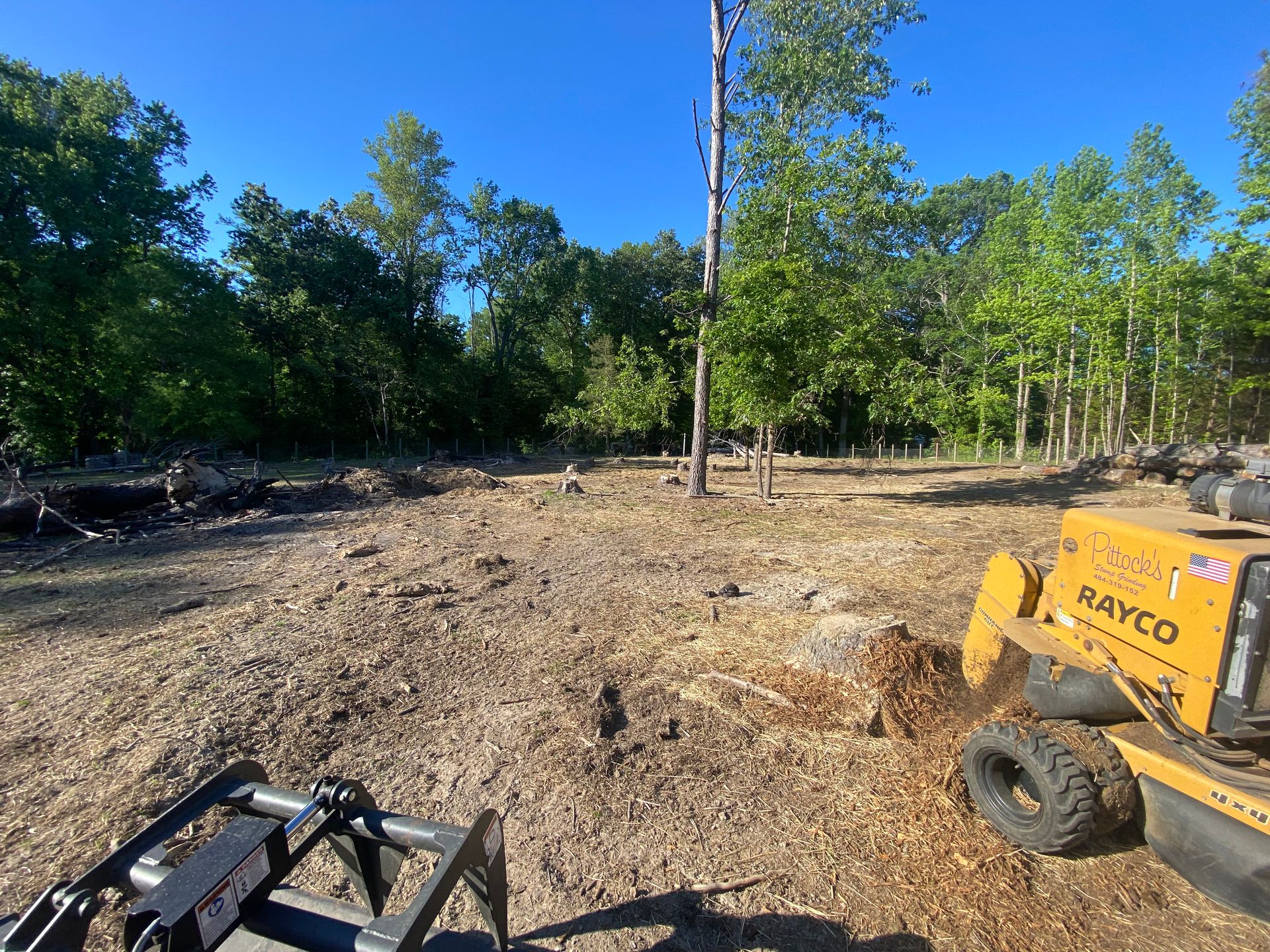
What Complete Lot Clearing Actually Accomplishes
Clearing starts with marking boundaries and identifying any trees or features designated for preservation in site plans. Trees are felled directionally to avoid damage to adjacent properties or preserved areas, then cut into manageable sections for removal or chipping. Stumps are ground below grade or fully removed depending on whether the area will support structures, pavement, or landscaping, with root removal extending to depths that prevent interference with footings or utilities.
After clearing, the site offers unobstructed access for heavy equipment, a level working surface free of tripping hazards and obstructions, and soil conditions suitable for compaction testing and utility trenching. Grading equipment moves across the lot without navigating around stumps or root masses, and layout crews establish building corners and grades without clearing additional vegetation. The absence of organic material in the building envelope reduces settlement risk and eliminates habitat for termites and carpenter ants that colonize buried wood.
Construction site clearing is timed to occur after permits are issued but before earthwork contractors mobilize, ensuring the site is ready without exposing bare soil to erosion for extended periods. Property development preparation includes clearing access roads, utility corridors, and building pads in phases to match construction sequencing. Residential lot clearing for custom homes often involves selective preservation of specimen trees outside the building footprint, requiring careful coordination between clearing crews and site designers.
Questions Before Starting Your Project
Developers and homeowners preparing sites for construction need clarity on what clearing includes and how it integrates with other site work. These answers explain the scope and timing.
What gets removed during complete land clearing?
All trees, stumps, brush, vines, and surface roots within the clearing boundary are removed, along with any debris or dead material, leaving bare soil ready for grading or construction without further vegetation management.
How is land clearing coordinated with grading and construction schedules?
Clearing typically happens after boundary surveys and permits are complete but before grading begins, allowing vegetation removal without disturbing finished grades and ensuring access for earthmoving equipment.
When should trees be preserved during land clearing in Suffolk?
Trees outside the building footprint, utility corridors, and drainage paths can be preserved if site plans designate them for retention, requiring protective fencing and careful equipment operation to avoid root zone compaction or trunk damage.
What happens to cleared trees and vegetation?
Material is chipped for mulch, hauled to disposal facilities, or burned on-site where regulations permit, with selection based on volume, haul distance, and whether mulch can be reused for erosion control or landscaping.
How does clearing prepare the site for utilities and foundations?
Removing stumps and roots eliminates voids that cause settling under footings or pavement, clears trenching paths for water and sewer lines, and allows compaction testing to occur on mineral soil rather than organic material that compresses unpredictably.
Earthworxs Solutions clears land for construction and development projects throughout Suffolk, removing vegetation and preparing sites for grading and building. Contact us to review your site plans and schedule clearing that aligns with your construction timeline and debris management preferences.