
Clear Ground After Trees Are Gone
Stump Grinding & Removal in Suffolk for eliminating remaining stumps, root systems, and yard obstacles after tree removal
A stump left after tree removal creates obstacles for mowing, planting, and grading while continuing to sprout new growth from the root system. Grinding reduces the stump below ground level using rotating carbide teeth that chew wood into mulch, while full removal extracts the stump and major roots entirely. Earthworxs Solutions provides both approaches depending on whether the site will be landscaped, paved, or prepared for construction in Suffolk.
Grinding is faster and less disruptive, pulverizing the stump six to twelve inches below grade and leaving wood chips that decompose over time. Full removal involves excavation around the root ball and mechanical extraction, used when the area will support structures or hardscaping where subsurface wood could cause settling.
Arrange an on-site evaluation to determine whether grinding or full removal matches your plans for the cleared area.
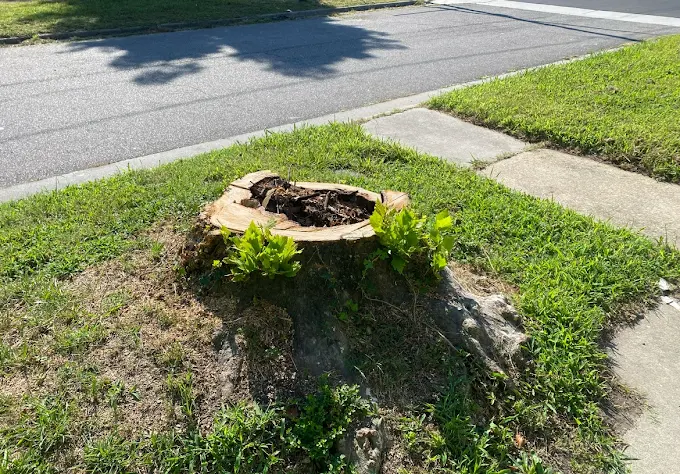
Why Stump Removal Prevents Future Problems
Grinding eliminates the visible stump and enough of the root crown to prevent regrowth in most species, though some root mass remains underground and decays naturally. The grinder reduces wood to chips in layers, working down until the stump sits well below turf level, allowing soil and sod to cover the area without interference. Root removal targets lateral roots that extend beyond the stump footprint, often necessary when roots have damaged hardscaping or threaten underground utilities.
Once grinding is finished, the depression left behind is filled with the wood chips produced during grinding or topsoil if you plan to replant immediately. Turf grows over the leveled area within a growing season as the chips settle and decompose. Full stump removal leaves a larger hole that requires backfill and compaction, but guarantees no subsurface wood remains to interfere with footings, pavement, or drainage installations.
Yard cleanup following stump work includes redistributing or hauling away excess wood chips and smoothing the grade to match surrounding terrain. Properties with multiple stumps are typically processed in one session to avoid repeated equipment mobilization and turf damage from machine travel paths.
Common Questions About Stump Grinding
Homeowners preparing yards for landscaping or construction often want clarity on how deep grinding goes and what remains afterward. These details help you plan the next steps.
How deep does stump grinding go?
Grinding typically extends eight to twelve inches below the soil surface, deep enough to allow turf or shallow-rooted plants to establish without interference from remaining wood.
What happens to the wood chips created during grinding?
Chips are left on-site to fill the depression unless you request removal, and they decompose over several months, gradually settling as they break down into organic matter.
When is full stump removal necessary instead of grinding?
Removal is required when the site will support structures, pavement, or utilities where subsurface wood decomposition could cause settling or voids that compromise stability.
How does root removal differ from stump grinding?
Root removal targets lateral roots extending away from the stump, often used when roots have surfaced, cracked driveways, or grown into sewer lines, requiring excavation and cutting beyond the main stump footprint.
What affects how long stump grinding takes in Suffolk?
Stump diameter, wood hardness, number of stumps, and site access for equipment all influence duration, with larger stumps in hardwood species like oak requiring more grinding time than softwoods.
Earthworxs Solutions completes stump grinding and removal for properties throughout Suffolk, preparing yards for replanting or construction. Contact us to schedule grinding based on your timeline and discuss chip disposal options that match your landscaping plans.