
Ground Work Built for Load and Drainage
Excavation Services in Suffolk for properties requiring foundation trenches, utility lines, or structural site cuts
Earthworxs Solutions handles excavation work in Suffolk, addressing the specific depth, width, and compaction requirements that foundation pours, utility installations, and structural builds demand. Whether you're preparing for a new construction project, running water or sewer lines, or creating access routes that support heavy equipment, the excavation process determines whether your site drains correctly and supports the load it will carry. Residential and commercial projects in this region often encounter clay-heavy soil layers that affect trench stability and require adjustments in excavation technique to prevent sidewall collapse during the work.
General excavation removes soil to specified depths and grades, creating the voids needed for footings, basements, and underground infrastructure. Trenching involves narrow, deep cuts for utility runs, where width and slope must meet code while maintaining safe working conditions. Foundation and construction excavation includes perimeter cuts, internal floor excavation, and backfill compaction that directly affect how well the structure sits and whether water moves away from the building envelope.
Schedule a site assessment to establish excavation depth, soil conditions, and access requirements for your project.
What Proper Excavation Requires
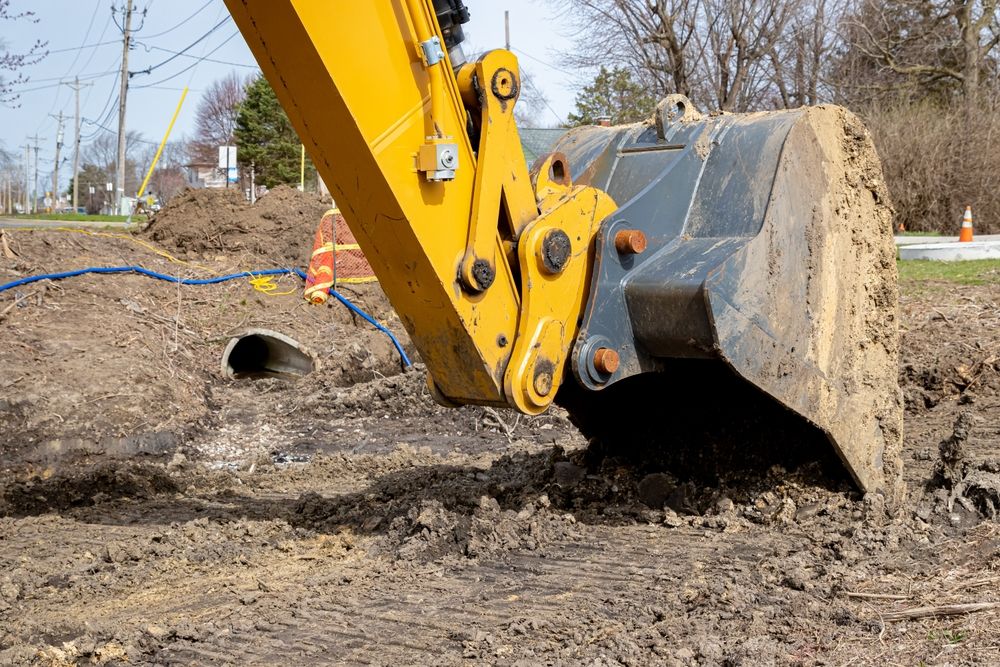
Excavation begins with locating underground utilities, establishing grade benchmarks, and identifying soil composition at the required depth. The equipment used depends on trench width, depth, and proximity to existing structures—compact excavators work in tight residential spaces, while larger machines handle open-site commercial work. Cuts are made to engineered specifications, with sidewalls sloped or shored depending on depth and soil type, and removed material is either stockpiled for backfill or hauled off-site.
Once excavation is complete, you'll see clean, stable cuts at the specified depth and width, with level base surfaces ready for gravel bedding or concrete pours. Trenches for utilities will have consistent grade to support drainage flow, and foundation perimeters will match the dimensions required by your building plans. Properly compacted backfill around installed systems prevents settling that would otherwise create surface depressions or stress on buried lines.
Excavation depth and soil removal volume are calculated from engineered drawings, but actual conditions encountered during digging—rock layers, groundwater seepage, or unsuitable soil—can require adjustments to the scope. Dewatering or additional base stabilization may be necessary if excavation encounters saturated ground, and this affects timeline and material costs.
Questions Before Starting Your Project
Excavation work in Suffolk varies based on soil conditions, depth requirements, and site access, so property owners often ask about preparation steps and what to expect during the process.
What happens before excavation begins?
Utility locates are completed, grade benchmarks are set, and the excavation area is marked to match the dimensions on your site plan or engineering drawings.
How deep can trenching go safely?
Trench depth determines whether sloping, shoring, or trench boxes are required—depths beyond five feet typically require protective systems to meet safety standards and prevent sidewall collapse.
What site conditions affect excavation work in Suffolk?
Clay-heavy soils common in this area hold moisture and require slope adjustments to prevent trench wall failure, while sandy soils drain faster but may need wider cuts for stability.
What gets included in foundation excavation?
The work includes perimeter cuts to footing depth, removal of unsuitable material, base compaction or gravel placement, and rough grading to direct water away from the excavation area.
When should excavation be scheduled?
Timing depends on your construction schedule and weather—prolonged rain can flood open excavations and delay subsequent work, so coordination with concrete or utility contractors is necessary.
Earthworxs Solutions provides excavation services tailored to your project's depth, soil conditions, and access constraints. Request a detailed estimate based on your site plan and utility requirements to establish scope and timeline.